A school trip usually means an early start, a packed schedule, backpacks underfoot, and a bus full of excited students. For teachers and trip coordinators, however, there is a lot more to manage than getting everyone from one place to another. The vehicle needs to accommodate the group, fit the itinerary, handle luggage or equipment, and get everyone back on schedule.
So, what is the ride actually like for students?
From finding a seat and settling in to passing the time between stops, the bus is a big part of the trip. Knowing what to expect can make boarding easier and help students understand how to make the journey comfortable for everyone.
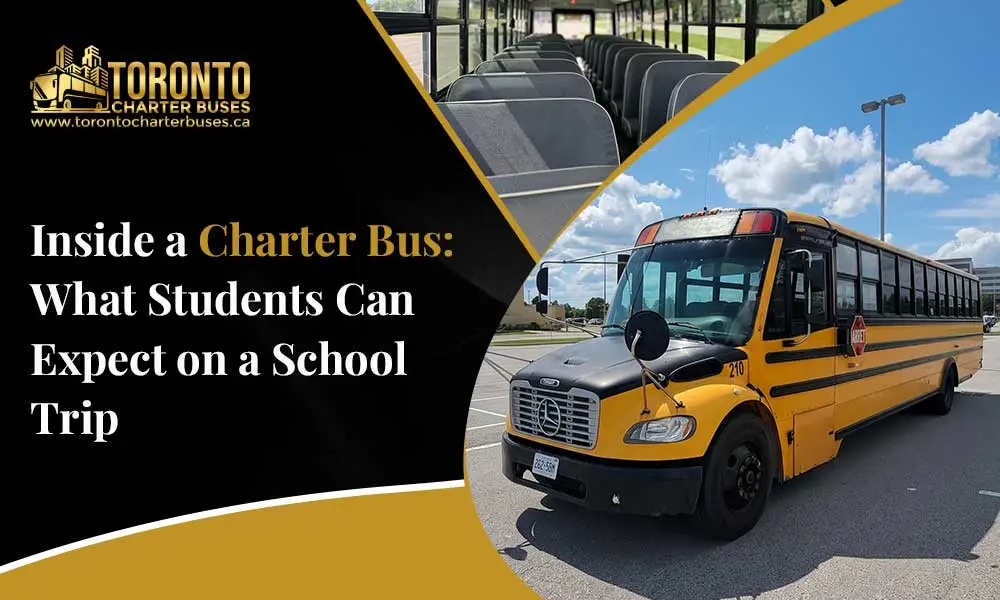
There is no single charter bus layout. The interior varies by vehicle size and model, so the experience can be different on a smaller school bus than on a full-size coach. Toronto Charter Buses currently lists a 56-seat coach equipped with climate control, armrests, footrests, window shades, tinted windows, and a PA and microphone system. Its fleet also includes a 25-seat school bus and a mini bus.
Before confirming a vehicle, check:
The first few minutes can be the busiest part of a school trip. Students arrive with backpacks, lunches, jackets, sports gear, and whatever else they need for the day. If everyone boards at once without a plan, finding seats and completing attendance can take longer than expected.
A simple boarding routine keeps things moving. Students can head directly to their seats, place bags where they will not block the aisle, and stay seated while teachers finish their headcount. Assigned seating can also be useful when a group is large or when teachers need to know where particular students are sitting.
Ontario school bus guidance advises passengers to find a seat promptly, remain seated facing forward, keep the aisle clear, and follow safety instructions. Those same habits are useful on a chartered school trip. Before leaving, teachers should also cover the rules for food, personal devices, noise, belongings, and getting on and off the bus at stops.
Once the bus is on the road, the ride can become its own part of the school trip. Students might catch up with friends, read, listen to music through headphones, watch the scenery, or sleep if the journey is long.
The main thing is knowing where the limits are. Personal devices and conversations should not become a distraction for the driver, and students need to remain in their seats while the bus is moving.
For longer journeys, small comfort details matter. Climate control, supportive seating, window shades, and enough room for belongings can make a noticeable difference when students and chaperones are spending several hours on the road.
Safety is something to confirm before the trip, not after the bus arrives. Transport Canada identifies school buses as the safest means of transporting students to and from school, and federal requirements cover areas including vehicle construction, passenger protection, and safety equipment.
School buses are designed with safety features such as compartmentalization, which uses closely spaced, energy-absorbing seats to help protect passengers during a collision. Seat belts are a separate consideration. They are not automatically installed on every school bus, and requirements can vary depending on the vehicle and the applicable rules.
For schools arranging a chartered trip, it is worth asking straightforward questions before booking: Which vehicle will be provided? What safety requirements apply to that vehicle? Who will be driving it? What insurance coverage is in place? Getting those details confirmed in advance gives teachers and trip coordinators a clearer picture of the transportation they are arranging.
A bus is a shared space, so a little consideration goes a long way. Students do not need a long list of complicated rules. They simply need to know how their behaviour affects the people around them and the person driving the bus.
Following these basics makes the ride more comfortable for classmates and chaperones and allows the driver to concentrate on the road.
This depends on the school’s rules and the provider’s policy. Teachers should tell students before departure what is allowed.
If snacks are permitted, choose food that is easy to handle and drinks that close securely. Schools should also consider allergies and individual dietary needs. On longer trips, a planned stop may be a better place for a full meal than the moving bus.
Longer journeys may include scheduled breaks. Timing depends on the route, traffic, trip length, and itinerary. Before students leave the bus, teachers should give them a meeting point, a return time, clear boundaries, and a reminder that attendance will be checked.
Take another headcount before departure. The same routine can be used at attractions, restaurants, rest areas, and other stops.
Motion sickness is easier to manage when teachers know about it beforehand. Parents can mention a student’s history before the trip, and students should tell a teacher or chaperone as soon as they feel unwell.
Keep water, tissues, and any approved supplies easy to reach. Do not leave essential items buried in luggage.
Start with the group and itinerary, not the vehicle. A smaller local group may suit a school bus or mini bus. A larger group travelling farther may need a full-size coach with greater capacity and storage. Toronto Charter Buses currently lists a 25-seat school bus and a 56-seat coach bus.
When requesting a quote, provide:
Complete trip details help the operator recommend a suitable vehicle and prepare an accurate quote.
Students may remember the museum, tournament, science centre, or other destination most clearly, but the hours spent travelling are part of the experience too. The bus is where classmates catch up, watch the scenery, talk about what is coming next, and, on the way home, compare their favourite parts of the day.
For teachers and trip coordinators, good transportation planning comes down to preparation. Know the group size, understand the itinerary, choose a vehicle that fits the trip, and make the expectations clear before everyone boards.
Planning a field trip, sports outing, educational tour, or student group journey in Toronto or the GTA? Toronto Charter Buses offers school buses, mini buses, and coach buses for different group sizes and trip requirements. When requesting a quote, provide your group size, route, date, schedule, and any luggage, equipment, or accessibility needs.
It depends fully on the type of vehicle you choose. Toronto Charter Buses currently lists a 25-seat school bus and a 56-seat coach. The final count should include students, teachers, chaperones, and other passengers.
Safety depends on the vehicle, operator, driver, and applicable regulations. School buses are the safest means of transportation for students to and from school, with federal safety requirements for school bus design and construction.
This depends on the school’s rules and the provider’s policy. If snacks are allowed, students should bring easy-to-manage food and secure drinks. Teachers should also consider allergies, waste, and whether a planned stop is better for meals.
There is no single deadline for every trip. Schools should arrange transportation once the travel date, passenger count, route, pickup time, destination, and return schedule are known. Earlier planning is useful for busy school-trip periods and large groups.
Provide the travel date, passenger count, pickup and drop-off locations, departure and return times, destination, planned stops, and any luggage, equipment, or accessibility requirements. Complete details help in recommending the right vehicle and preparing an accurate quote.