Moving a large group sounds straightforward on paper. In practice, anyone who has arranged transportation for a school trip, wedding, corporate outing, or sports team knows how quickly things can get complicated. Keeping several cars, rideshares, or public transit connections on schedule can be costly, difficult to manage, and less safe than having everyone travel together.
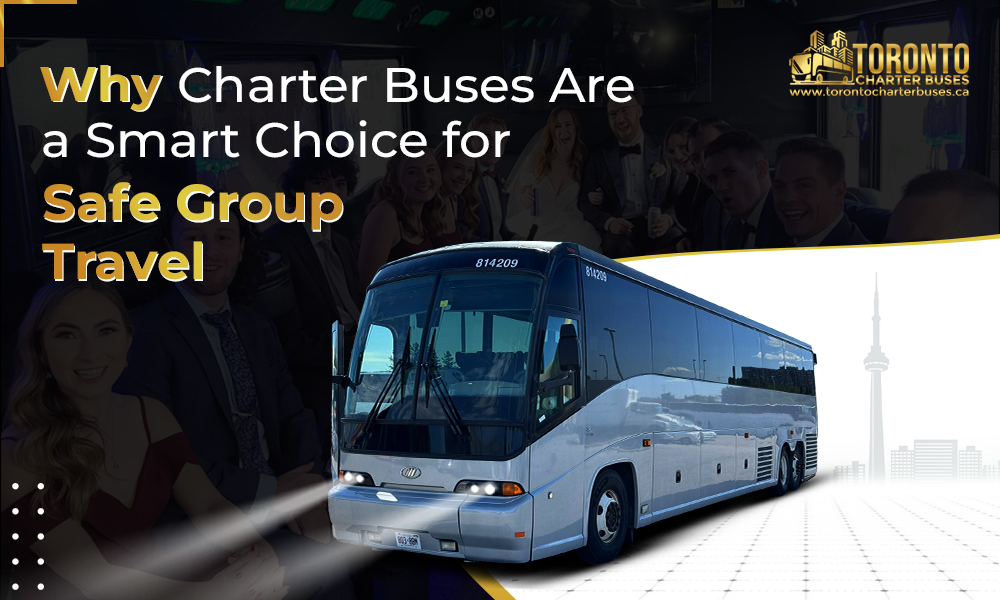
For that reason, charter buses have become a practical option for event planners, schools, businesses, and families across Toronto and the GTA. Instead of keeping track of several vehicles, everyone travels together with one driver and one schedule. Here is a closer look at the safety benefits, cost considerations, and other factors worth considering before you book.
Even a group of 15 or 20 people can create transportation headaches. Depending on how everyone travels, you may run into issues such as:
The larger the group, the harder those issues become to manage. With a charter bus, everyone shares the same vehicle, driver, route, and planned arrival time.
Safety is often one of the first things people consider when arranging group transportation. Available road-safety data also gives buses a strong advantage when compared with private vehicles.
According to Transport Canada’s Road Safety in Canada report, the average occupant fatality rate for school buses works out to about 0.1 fatalities per 10,000 registered buses, compared to roughly 0.5 fatalities per 10,000 vehicles across all vehicle types combined. Put simply, the reported fatality rate per registered vehicle is considerably lower for buses than for vehicles overall.
U.S. data from the Federal Motor Carrier Safety Administration shows a similar long-term pattern for large buses and coaches, including declining fatality rates per hundred million miles travelled. Taken together, the Canadian and U.S. figures support the view that professionally operated buses are a very safe option for road travel.
Several practical factors contribute to the safety of charter bus travel.
Professional & licensed drivers: Charter bus drivers hold commercial licenses and train specifically for handling large vehicles, tight city streets, highways, and long routes. They are not multitasking behind the wheel like a rideshare driver checking an app. Driving is their sole job for the trip.
Routine inspections and maintenance: Licensed charter operators in Ontario must follow strict vehicle inspection and maintenance schedules under provincial commercial transport regulations. A bus carrying 40 or 50 passengers simply cannot skip a brake check the way a personal car sometimes does.
Larger vehicle design: A bus is built differently from a standard passenger car. Its size, weight, and structure can provide different levels of protection in a collision.
Fewer vehicles on the road means fewer risks: If a 40-person office group travels in one bus instead of 10 separate cars, there are fewer vehicles involved in the same journey. That can simplify the trip and reduce the number of vehicles sharing the same roads and traffic conditions.
Safety is only part of the reason groups choose charter buses. The same trip can also be easier to organize, more comfortable, and more predictable when everyone travels together.
Everyone can board at the same pickup point and travel together from there. You are not checking whether one driver has arrived, calling another passenger who is running late, or trying to keep several vehicles on the same route.
Depending on the vehicle, passengers may have reclining seats, climate control, extra legroom, Wi-Fi, and space for luggage. Those features can make a noticeable difference when your group is travelling for two hours to Niagara Falls or heading across the border.
When the rental cost is divided among 30, 40, or 56 passengers, the price per person can be significantly lower than paying separately for rideshares, fuel, and parking across several vehicles. Market Research Future reports that companies switching to charter bus services for group travel can cut transportation costs by up to 20%.
A charter bus can be useful whenever a group needs to travel together and stay on the same schedule. Common examples include:
Getting a large group around Toronto comes with its own transportation challenges. Downtown congestion during rush hour, road closures for events like TIFF or the CNE, and construction detours can turn a 20-minute drive into an hour of frustration when everyone navigates separately.
Winter travel can be harder to manage when several vehicles are involved. Snow, ice, and changing road conditions are common during the colder months. Experienced charter bus drivers are familiar with handling winter roads and adjusting routes when conditions or traffic make the original plan impractical.
Parking becomes another issue when several vehicles are travelling to the same destination. Venues near the downtown core, the waterfront, and major stadiums often have limited or costly parking, and finding a spot for even one car is hard enough, let alone 10 or 15. A charter bus can drop passengers near the destination and collect them later, reducing the need for everyone in the group to find separate parking.
Here is a quick comparison of the main group travel options:
| Option | Safety | Cost for Groups | Coordination Effort | Comfort |
|---|---|---|---|---|
| Charter bus | Excellent | Low per person | Minimal | High |
| Multiple rideshares | Moderate | High | Heavy | Low to moderate |
| Public transit | Good | Very low | Very heavy | Low |
| Private vans | Moderate | Moderate | Moderate | Moderate |
Planning transportation is usually easier when the whole group can travel in the same vehicle. There is one driver to coordinate, one route to follow, and no need to keep several cars on the same schedule. For groups travelling around Toronto or farther afield, those practical benefits can make a charter bus a sensible option.
Toronto Charter Buses provides transportation for schools, businesses, wedding groups, sports teams, and other organizations across Toronto and the GTA. With a range of vehicles, licensed drivers, and straightforward booking options, the company can help plan transportation around your group size, destination, and schedule. Request a free quote to discuss your upcoming trip.
Yes. Available road-safety data shows a lower occupant fatality rate per registered vehicle for buses than for vehicles overall. Professional commercial drivers, required inspections, regular maintenance, and the design of larger vehicles all contribute to this safety record. Travelling together also means fewer individual vehicles on the road and less need for multiple drivers to coordinate the trip.
For weekends, graduation season, holidays, and major Toronto events, booking four to six weeks ahead is a good idea. It gives you more time to find a vehicle that suits your group size and schedule. Shorter trips during quieter periods may have more flexibility, but availability can still depend on the date, destination, and number of passengers.
Yes. Many Toronto-based charter operators provide long-distance and cross-border transportation in addition to trips throughout Toronto and the GTA. Before booking, confirm that the operator and vehicle are suitable for your destination and that all required travel documentation and border procedures are understood. The booking process may also vary depending on the length and nature of the trip.
Charter bus fleets typically include several vehicle sizes, from smaller minibuses for compact groups to full-size coaches that can accommodate up to 56 passengers. The best option depends on more than passenger numbers. Consider how much luggage or equipment you have, the distance you are travelling, pickup locations, and whether everyone needs to stay together throughout the trip.
Often, yes, particularly when you are moving a larger group. Dividing one bus rental among several passengers can reduce the per-person cost compared with paying separately for fuel, parking, and multiple rideshares. However, the final price depends on factors such as group size, travel distance, vehicle type, trip duration, and pickup or drop-off requirements.